Severe chronic illness
A reality too heavy to remain so little visible.
A reality too heavy to remain so little visible.
Sickle cell disease is not just a medical definition.
It is a daily reality made up of pain, fatigue, emergencies, and misunderstandings.
Sirckle starts from a simple observation: today, what the affected individuals experience remains too invisible, too scattered, and too misunderstood.
Sickle cell disease is not just a medical definition.
It is a daily reality made up of pain, fatigue, emergencies, and misunderstandings.
Sirckle starts from a simple observation: today, what affected individuals experience remains too invisible, too scattered, and too misunderstood.

Invisible
Intense
Constant
Intense
Invisible
Intense
Constant
Intense
Invisible
Intense
Constant
Intense
Are you concerned, up close
or from afar
by sickle cell disease?
What you are experiencing,
physically and mentally, is real.
But it is still too rarely understood at its true measure.
But it is still too rarely
understood in its true measure.
A PATHOLOGY STILL MISUNDERSTOOD
AND UNDER-ESTIMATED

A pathology that is still poorly understood and underestimated
A PATHOLOGY STILL MISUNDERSTOOD
AND UNDERSTIMATED
An invisible disease, but very real.
An invisible disease, but very real.
Sickle cell disease is a chronic genetic blood disorder, present from birth.
It causes extremely intense pain, serious complications, and persistent fatigue.
In Europe, it is considered a rare disease. However, it affects millions of people worldwide, often from populations that are still underrepresented in healthcare systems.
Despite its impact, it remains poorly understood, poorly recognized, and insufficiently structured in many care pathways.
And above all, it imposes a daily reality that many do not see and few truly understand. Too often, people living with sickle cell disease still have to explain, justify, or even prove what they experience — even in urgent situations.
Sickle cell disease is a chronic genetic blood disorder, present from birth.
It causes extremely intense pain, serious complications, and persistent fatigue.
In Europe, it is considered a rare disease. However, it affects millions of people worldwide, often from populations that are still underrepresented in healthcare systems.
Despite its impact, it remains poorly understood, poorly recognized, and insufficiently structured in many care pathways.
And above all, it imposes a daily reality that many do not see and few truly understand. Too often, people living with sickle cell disease still have to explain, justify, or even prove what they experience — even in urgent situations.
frequent hospitalizations
unequal support
Uneven support
unpredictable crises
Unpredictable crises
complex course
Complex course
Underestimated reality
High mental load
underestimated reality
high mental load
frequent hospitalizations
Uneven support
Unpredictable crises
Complex course
Underestimated reality
High mental load
A SOLUTION UNDER CONSTRUCTION
Sirckle: starting from reality to finally improve what's next
Sirckle is a platform under development, designed for people living with sickle cell disease, their loved ones, and those who genuinely want to understand this illness.
Its name comes from the combination of “Circle” and “Sickle cell.”
The principle is simple: what you experience should no longer remain isolated.
It should serve to better understand the disease, improve reactions around you, and concretely advance care — including in hospitals, in emergency situations.
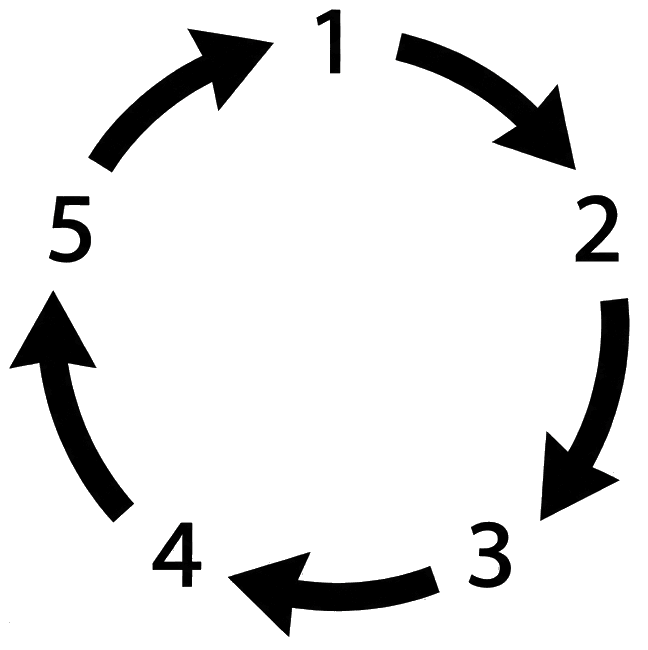

1
The experience is expressed
Sickle cell patients and their loved ones share the reality of sickle cell disease on a daily basis: pain, fatigue, hydration, nutrition, social life, and mental health, among other aspects.
2
What you are experiencing is finally connected and starting to make sense.
The platform brings together experiences and highlights what is similar, what occurs frequently, and what depends on situations. What seemed isolated or incomprehensible becomes clearer. We begin to see patterns, not just isolated cases.
3
We finally understand the disease in real life.
We better identify what triggers the crises, what really helps, and why each person experiences the illness differently.
Sickle cell disease is no longer just 'explained': it becomes understandable in everyday life. And that changes the way to anticipate it.
4
Good people are beginning to better understand and better react.
What you are experiencing is no longer invisible.
Through the platform, your realities circulate, are shared, and become understandable to those who really need them.
Loved ones better understand how to act at the right time.
Caregivers have access to real situations, not just theories. And even those who didn't know about the illness begin to see it differently.
No one speaks for you anymore.
We finally understand what you are going through.
5
This circle concretely improves support.
As you better understand, reactions change.
And when reactions change, decisions do as well.
In critical moments (like a crisis or an emergency) you are better recognized, better understood, and taken more seriously. Hospital care becomes quicker, more suitable, and more aligned with what you are actually experiencing. Exchanges are clearer, fairer, and more effective.
You spend less time explaining, convincing, or justifying yourself. It's no longer up to you to prove how you feel.
The system finally starts to adjust to you.
And the more this circle grows, the more this improvement becomes real, visible, and accessible to everyone.
A SOLUTION UNDER CONSTRUCTION
Sirckle: starting from reality to finally improve what's next
Sirckle is a platform under development, designed for people living with sickle cell disease, their loved ones, and those who genuinely want to understand this illness.
Its name comes from the combination of “Circle” and “Sickle cell.”
The principle is simple: what you experience should no longer remain isolated.
It should serve to better understand the disease, improve reactions around you, and concretely advance care — including in hospitals, in emergency situations.
1
Experience is shared
On Sirckle, people with sickle cell disease and their loved ones share the reality of the illness daily: pain, fatigue, hydration, nutrition, social life, and mental health, among others.
This experience, often invisible, is finally beginning to be expressed, recognized, and taken into account.
What was isolated is no longer so.
2
Experiences overlap
With Sirckle, experiences are no longer isolated. They intersect, confirm each other, and allow for a better understanding of what recurs, what varies, and what truly impacts daily life.
All shared information is anonymized to guarantee everyone's security while allowing for a clearer collective understanding. What was scattered is beginning to form a more coherent vision.
3
Reality becomes clearer
Thanks to Sirckle, anonymized experiences intersect and make sense.
A more comprehensive view of the daily lives of people with sickle cell disease emerges, in all its dimensions: physical, mental, social, and personal.
What was invisible or fragmented finally becomes understandable.
4
Reactions are evolving
Thanks to Sirckle, what you are experiencing is no longer invisible.
The experiences circulate, are understood, and become accessible to those who need to react at the right moment.
Loved ones better understand how to support.
Professionals access a more concrete reality, beyond simple medical descriptions. Reactions become more accurate, faster, and especially better adapted to what you are actually experiencing.
And you are no longer alone in facing this reality:
you can exchange with other concerned individuals, share, compare, and move forward in an environment finally designed for you and around you.
5
This circle concretely improves support.
With Sirckle, as we learn to understand better, reactions change. And when reactions change, decisions do too.
In critical moments — like a crisis or an emergency — you are better recognized, better understood, and taken more seriously. The support becomes faster, fairer, and better suited to what you are actually experiencing. You spend less time explaining, convincing, or justifying yourself. It is no longer up to you to prove what you feel.
The system finally begins to adjust to you. And the larger this circle grows, the more this improvement becomes real, visible, and accessible to all.

DIRECTLY CONCERNED PERSONS
Depending on your situation, you may already be part of what is being built.
People living with sickle cell disease
You live with sickle cell disease. Your experience can help better understand the reality and improve the way you are cared for.
The relatives of people with sickle cell disease
You see what the disease entails on a daily basis. Your perspective is essential to better support and evolve the reactions around you.
People who want to better understand
You want to learn more about sickle cell disease. Gain a more real, more human, and closer perspective on what people really experience.

AN INVITATION TO BE PART OF THE BEGINNING
Access the first information about Sirckle
Leave your contact to follow the launch and discover firsthand what is being built.
Sirckle will be available for free to those directly affected by sickle cell disease.
You will be informed of the next steps, concrete advancements, and how you can be a part of it.
Join the first registrants
No commitment. Just be informed first about the launch.
AN INVITATION TO BE PART OF THE BEGINNING
Access the first information about Sirckle
Leave your contact to follow the launch and discover firsthand what is being built.
Sirckle will be available for free to those directly affected by sickle cell disease.
You will be informed of the next steps, concrete advancements, and how you can be a part of it.
Join the first registrants
No commitment.
Just be informed first about the launch.
7.7 M+
people live with sickle cell disease, often without being seen or understood.
300,000+
children are born each year with sickle cell disease.
80%
cases are concentrated in regions where access to care remains insufficient.
A FRAGMENTED REALITY
Why is sickle cell disease still poorly understood and poorly managed?
Why sickle cell disease is still
misunderstood and poorly managed
Scattered information
The information exists, but it is scattered, incomplete, and rarely connected in a useful way.
Limited understanding
The illness is often explained in theory, but remains distant from what people actually experience in their daily lives.
An experience little recognized
Pain, fatigue, social life, studies, work, mental health... A large part of this reality remains invisible or minimized.
Few reliable benchmarks
Patients, relatives, and professionals often proceed without a clear basis to understand, react, and provide proper support.
Patients, relatives, and the curious move forward, with few reliable landmarks, to truly understand and take action.
And in the end, the consequences are always the same:
And in the end, the consequences
are always the same:
And in the end, the consequences are
always the same:
misunderstood people,
inappropriate reactions,
and support
who arrive too late or incompletely.
who arrive too late or
in an incomplete manner.
It is not a lack of attention. It is a lack of structure.
It is not a lack of attention.
It is a lack of structure.
What you are experiencing should never be invisible — neither to you,
nor to those who need to support you.
What you are experiencing should never
be invisible either to you,
or to those who must
take care of you.
It’s not a lack of attention.
It’s a lack of structure.
What you are experiencing should never
be invisible to you, nor to those
who must take care of you.